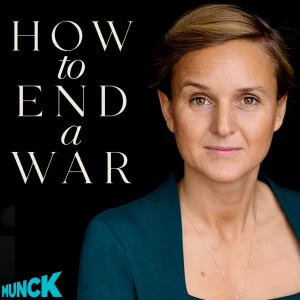
How to End a War explores how armed conflicts have actually been brought to an end in the real world, rather than in theory. Peace researcher Isabel Bramsen examines cases where people managed to break cycles of violence despite deep mistrust, trauma, and bloodshed. Each episode retraces the dramatic events of a conflict and introduces key figures who helped change its course toward reconciliation. The series focuses on the practical paths that made peace possible.
Episoder
8. Cyprus: No War, No Peace
In Cyprus, Isabel finds a ceasefire that has kept war at bay since 1974 - even though a peace deal never came. She speaks with former UN commander Kristin Lund and former UN Under-Secretary-General Christian Friis Bach about how the UN keeps the ceasefire alive and creates more ways for people on the divided island to meet. From there, the story raises a bigger question: what role can the UN still
7. Israel/Palestine: Should You Talk to Terrorists?
At the Nobel Peace Center in Oslo, Yasser Arafat’s face hangs among the peace prize winners - a man once seen as a terrorist who later stood on the White House lawn as part of a peace deal. Behind that dramatic turn lies years of secret diplomacy: quiet meetings after hours, decisive speeches at the UN and intense political maneuvering behind the scenes. Isabel meets diplomat Annika Söder who shar
6. Northern Ireland: Negotiation Is Another Way to Fight
Can you carry a rebellion into the negotiating room? Isabel meets Gerry Adams, one of the central figures in the Northern Ireland peace process, to explore how a political struggle can continue even after the guns begin to fall silent. There are secret back channels, worn-out T-shirts, powerful connections in the United States and years of hard bargaining. In 1998, it all comes together in the Goo
5. The Philippines: The Breakthrough Happens in the Break
What if the most important part of a peace talk happens when everyone leaves the table? In the Philippines, trust begins to grow in the moments in between - over a cigarette, away from the formal talks. Drawing on her own experience, Isabel joins chief negotiator Miriam Coronel Ferrer to explore how small, human moments can break a deadlock and change the course of a conflict.How to End a War is p
4. The Iran Nuclear Deal: The World’s Major Powers in One Hotel Room
Isabel connects today’s conflicts with lessons from the Iran nuclear deal. With insights from documentary filmmaker Karen Stokkendal Poulsen, we get a glimpse inside the intense negotiations at Palais Coburg in Vienna. Here, the world’s major powers come together for a high-stakes diplomatic battle - and a pair of crutches ends up playing a surprisingly important role.How to End a War is produced
3. Colombia: Victims at the Table
In Colombia, something unusual happens: victims are given a seat at the negotiating table. Isabel takes us inside a peace process where their stories become part of the solution. Together with peace negotiator Sergio Jaramillo, she explores how listening and making people feel heard can change the dynamic between the two sides - and help move even the most deadlocked conflicts forward.How to End a
2. The Minsk Agreements: Bringing the War to the Negotiating Table
How do you negotiate with someone who uses diplomacy as a weapon? Isabel explores the Minsk negotiations with Ukrainian researcher and peace mediator Tetiana Kyselova. At the same time, Vladimir Putin’s familiar power plays reveal a negotiating process shaped by pressure and manipulation - one that still influences how Ukraine views peace today.How to End a War is produced by Munck Studios Copenha
1. The Cold War: Trust or World War III?
Once again, the world is dangerously close to a conflict between major powers. But history shows that a single meeting can change everything. In 1985, Ronald Reagan and Mikhail Gorbachev meet face to face in Geneva. With Professor Marcus Holmes, we explore how their personal chemistry and growing trust helped turn this meeting into a turning point in the Cold War.How to End a War is produced by Mu
Prologue
How do you become obsessed with peace? For peace researcher Isabel Bramsen, understanding how wars end has become a lifelong project. What happens when enemies start talking to each other? And when something that once seemed impossible suddenly becomes possible? Again and again, she says yes to interviews, talking about something we hear far too little about. And in 2025, she becomes the most quot
Trailer
How do you end a war? Not in theory, but in the real world - amid deep mistrust, trauma, and bloodshed. In each episode, peace researcher Isabel Bramsen takes a close look at an armed conflict in which people managed to break the cycle of violence and pave the way for reconciliation. So how did they do it? This series retraces the dramatic events and introduces the key figures who changed the cour